8 July 2026
Cheche Za Nuru: building a website a small team can actually run
Case study · Cheche Za Nuru · Next.js · Supabase
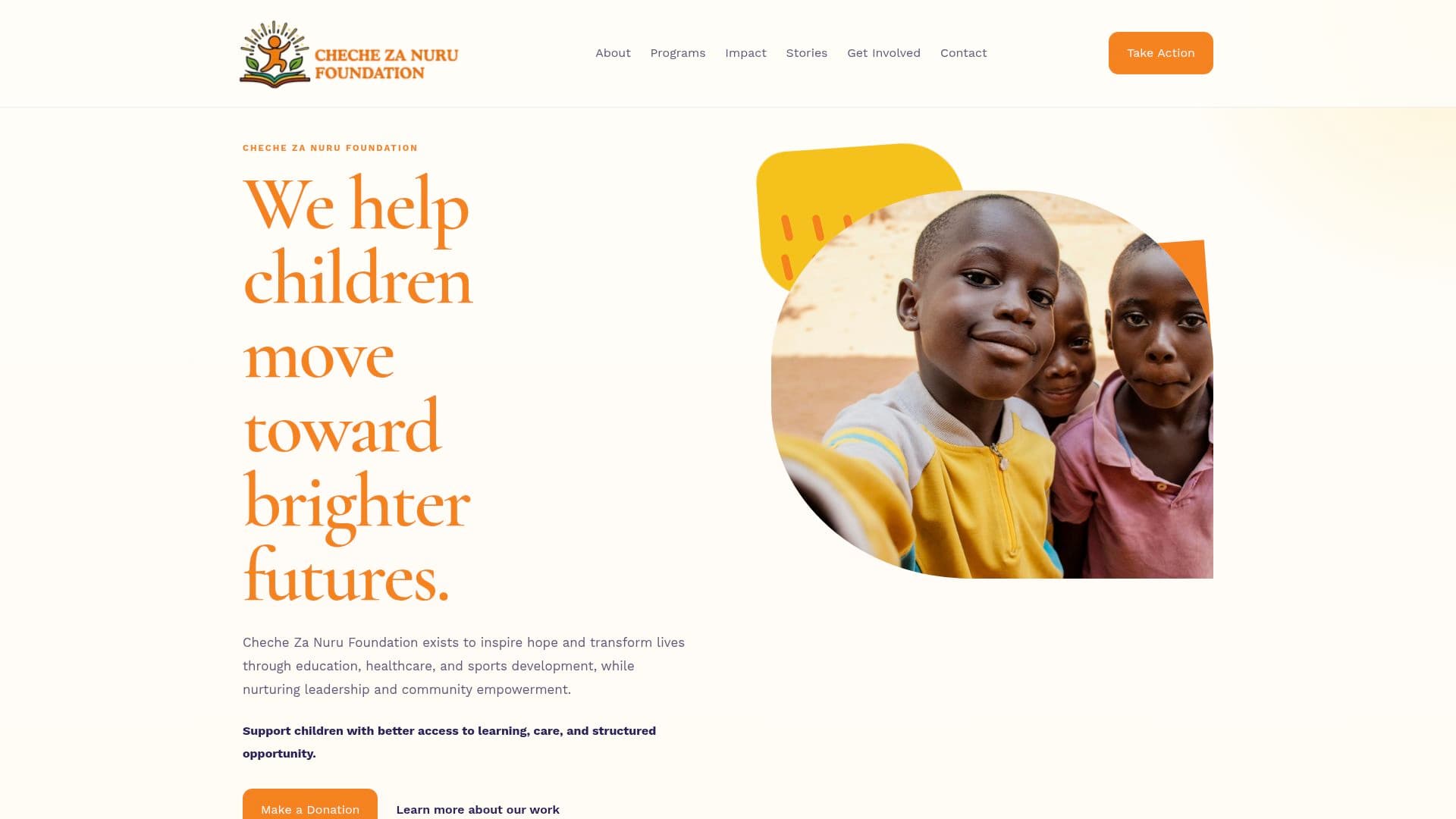
Cheche Za Nuru is a Kenyan foundation that works on three fronts at once: education through Nuru Scholars, healthcare through Afya Kwa Wote, and sport through the Rising Stars League. What I like about them is that they treat those as one thing that reinforces itself, rather than three separate charities wearing the same t-shirt.
I built their website. More importantly, I built the dashboard behind it.
The brief nobody writes down
Most small organisations ask for a website. What they actually need is a website they can run themselves after the developer walks away. A beautiful site the team cannot update is a dead site within a few months, frozen on whatever was true the day it launched.
So I spent most of the effort where visitors never look: the admin side.
A dashboard shaped like their work
The team can log in and manage the whole site on their own. Their stories, the photo gallery, staff profiles, upcoming programme events, and the impact numbers on the homepage. All of it is backed by Supabase and editable by people who have never seen a line of code and never should have to.
When the site says 175 children educated, 133 people treated and 105 children reached, those are not numbers I hardcoded and forgot. The team updates them as the work grows, so the site stays honest to what is actually happening on the ground.
Why this is the work I like
There is a version of this job that is all clever code and nobody to use it. This was the opposite. The measure of success here is boring and human: six months from now, is the team still updating the site without needing me. If yes, I did my job. If they had to call me, I built the wrong thing.
The stack
Next.js and TypeScript, Tailwind for the styling, React on the front, and Supabase holding the content, the accounts and the media. Nothing exotic. The interesting decisions were about who holds the keys, not which framework won.